
Skin and hair changes during perimenopause often take women by surprise. A complexion that once felt predictable may suddenly become drier, more sensitive, or more prone to breakouts. Hair that used to feel full and resilient may begin to thin, shed more easily, or lose some of its natural shine. These shifts can feel unsettling, especially for women who have always felt at home in their skin. But just like mood swings, sleep disruption, and joint pain, these changes are rooted in biology — not aging poorly, not stress alone, and certainly not a lack of self‑care.
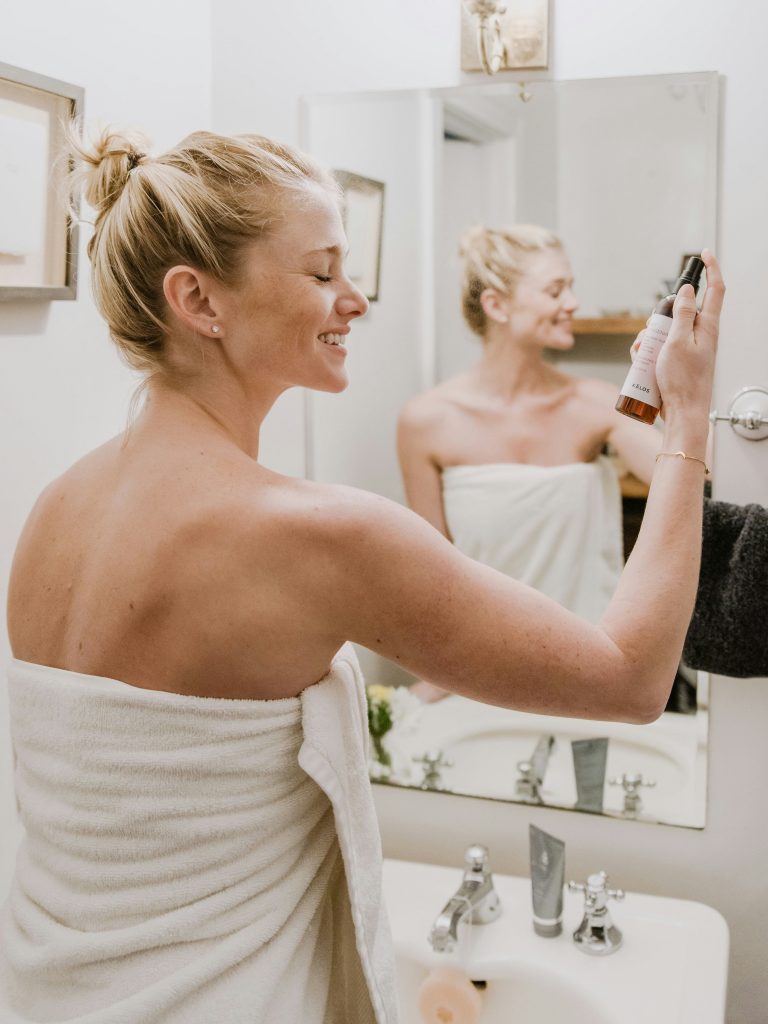
At home, these changes often show up in the mirror during everyday routines. A woman might notice that her moisturizer no longer seems to “sink in” the way it used to, or that her skin feels tight and flaky by midday. She may find herself dealing with unexpected acne along the jawline, or noticing fine lines that seem to appear overnight. Hair may feel more fragile when she brushes it, or she may see more strands in the shower drain than she’s used to. These moments can trigger frustration or sadness, not out of vanity, but because they represent a shift in how she recognizes herself.
At work, the impact can be quieter but still meaningful. A woman may feel self‑conscious under bright office lighting or during video calls, noticing texture or dullness she never paid attention to before. She might adjust her hairstyle to hide thinning areas or spend extra time trying to manage dryness or frizz. Even small changes can influence how she feels walking into a meeting or interacting with colleagues. These experiences often remain unspoken, even though they are shared by countless women navigating the same hormonal transition.
The physiological roots of skin and hair changes in perimenopause are closely tied to fluctuating estrogen levels. Estrogen helps maintain collagen, elastin, and skin hydration, and it supports healthy hair growth by influencing the hair follicle cycle. As estrogen declines, skin can become thinner, drier, and less elastic, while hair may shift into a slower growth phase or shed more easily. Changes in progesterone and testosterone can contribute to acne, oiliness, or shifts in hair texture. Add in stress, sleep disruption, and the natural aging process, and it becomes clear why these changes often appear suddenly and simultaneously.
Understanding why skin and hair shift during perimenopause can be incredibly reassuring. Women can explore supportive strategies with a clinician, whether that includes lifestyle adjustments, skincare routines, or discussing evidence‑based treatment options. For some women, hormone therapy becomes part of that conversation, as stabilizing hormone levels may support skin hydration, collagen maintenance, and overall hair health. The goal isn’t to chase youth — it’s to help women feel comfortable, confident, and connected to themselves as they move through this transformative stage of life.
Leave a Reply